A community-driven floodplain agro-ecosystem restoration initiative in Central Vietnam
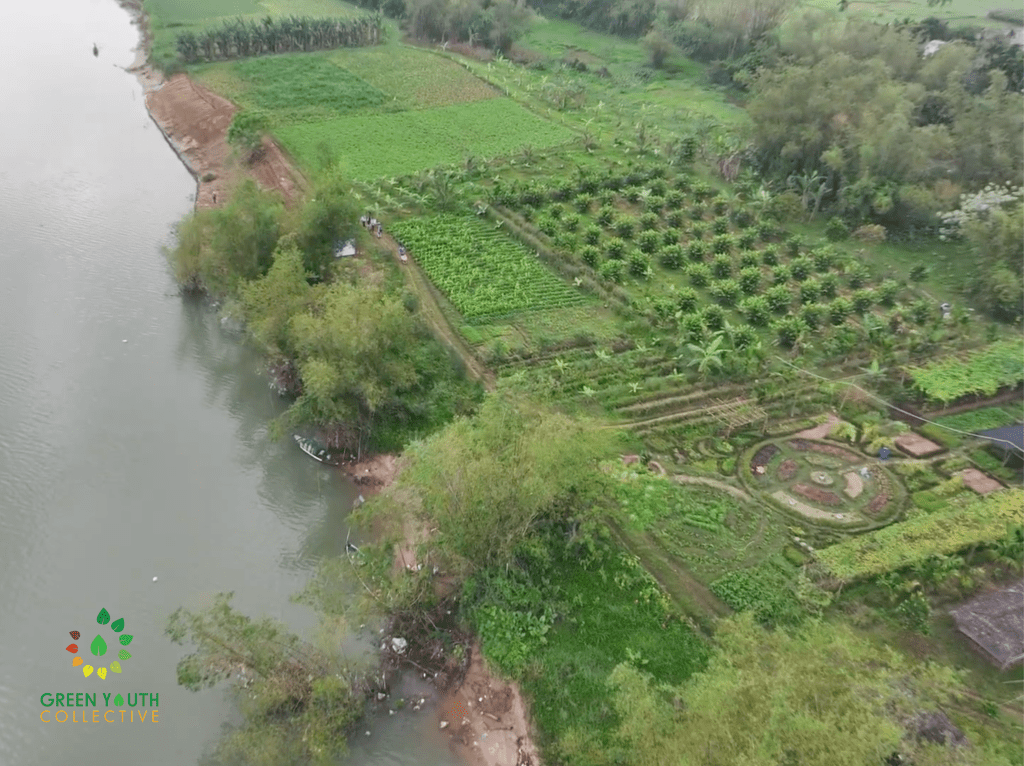
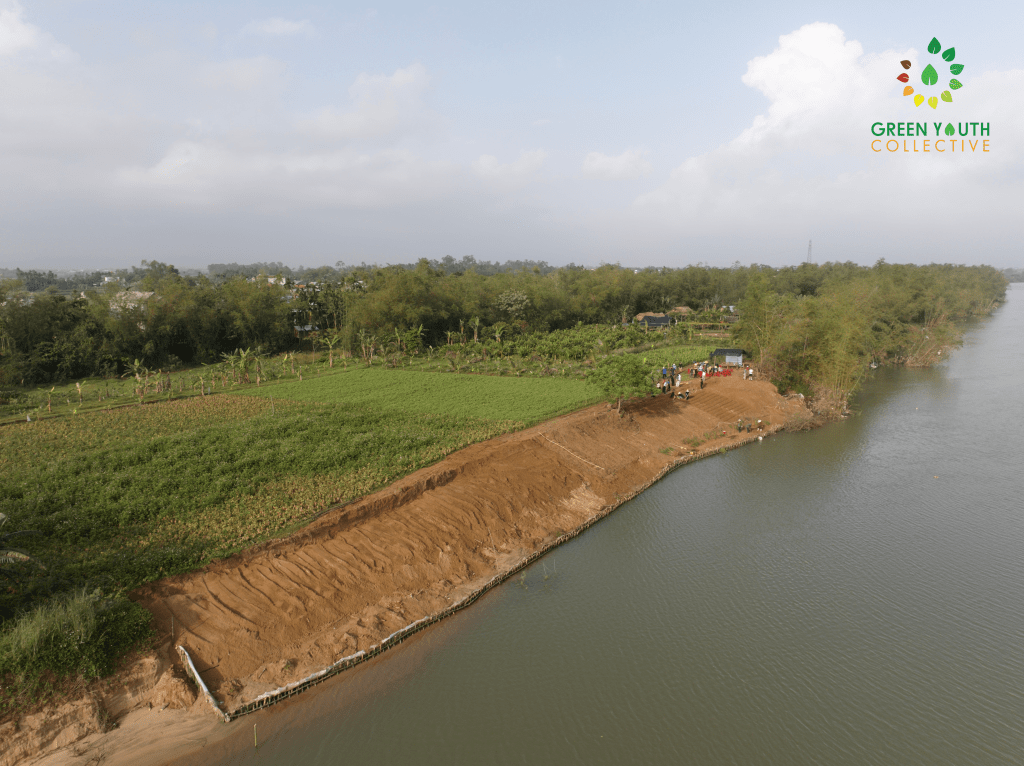
Along the lower Thu Bon River, Cam Phu – like hundreds of small, riverine villages across Central Vietnam, has long been shaped by the intimate relationship between river, soil, farming and village life. This floodplain is a living agro-ecosystem where biodiversity, local culture and rural livelihoods have evolved together over generations.
Today, that relationship is under growing pressure. Climate change, extreme weather, rapid urbanization and other external pressures are making riverbank communities increasingly vulnerable. In Cam Phu, erosion has become one of the clearest signs of that crisis. Each flood season can wash away productive land, weaken household security and push traditional farming knowledge closer to disappearance.
This is a systemic problem. No single farmer, village or organization can solve riverbank erosion alone. Communities cannot control upstream dam operations, large-scale infrastructure choices or all the wider forces reshaping the river basin. But that does not mean local people must simply wait for loss and damage to arrive.
At Green Youth Collective (GYC), our starting point is different: even in the face of systemic challenges, there are certain things that local communities can do to protect their own homeland and life. Within every place, there are still living forms of knowledge, locally rooted materials, adaptive practices and relationships that can become the foundation of meaningful action. Our role is to act as a key intermediary — helping reveal, reconnect and strengthen the values, capacities and nature-based solutions that already exist, but have often been fragmented, undervalued or pushed aside.
That is the deeper logic behind Green Youth Collective’s work in Cam Phu over the past five years, which is based in our almost 20 years of working in the areas of strengthening climate resilience among vulnerable communities across Central Vietnam. Following the historic floods of 2025, this long-term engagement evolved into a pilot initiative of riverbank stabilization as part of floodplain agroecosystem restoration. The goal is not only to reduce erosion at one site, but to help community lands restore ecological function, strengthen adaptive livelihoods and rebuild their capacity to act together.
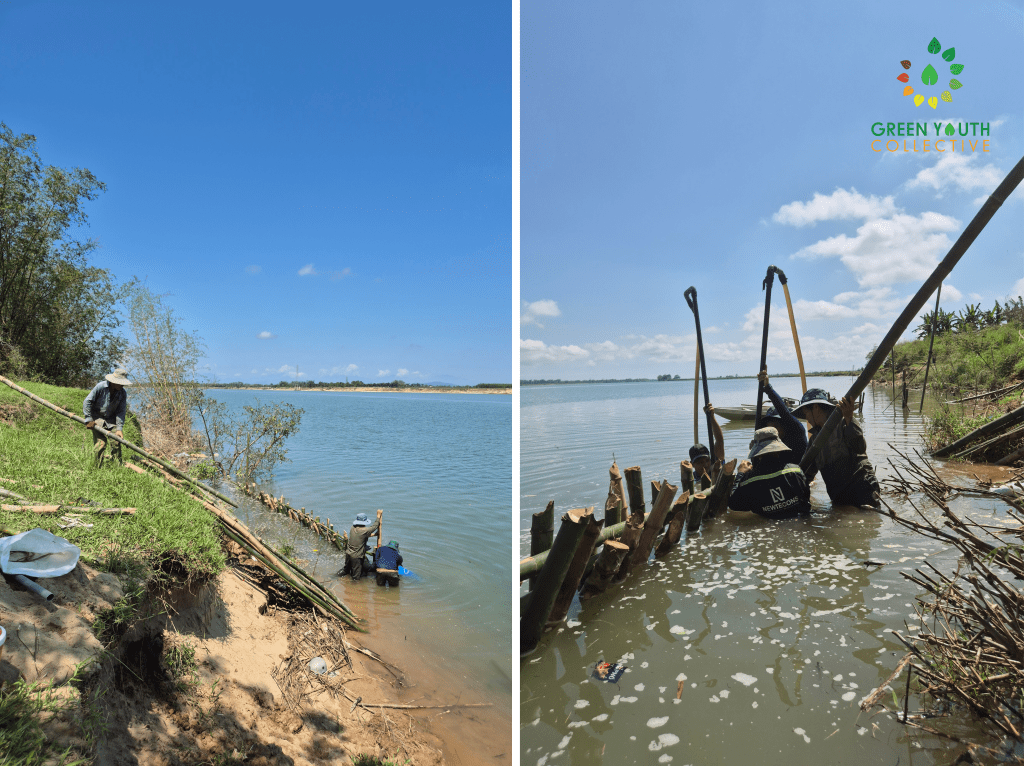
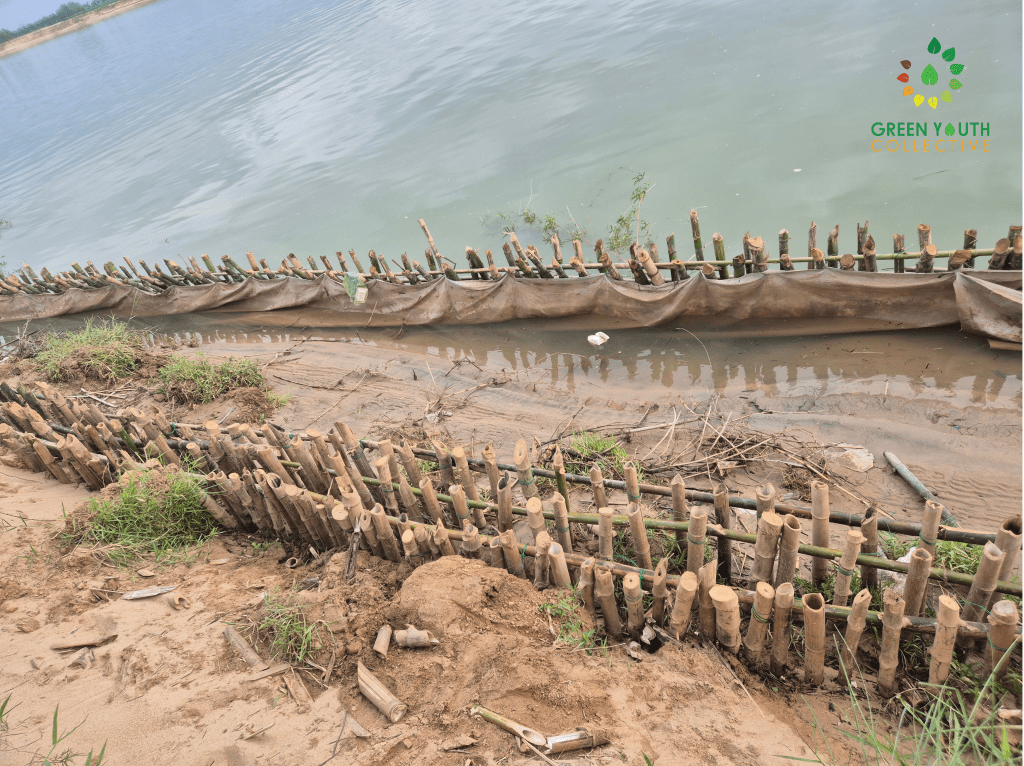
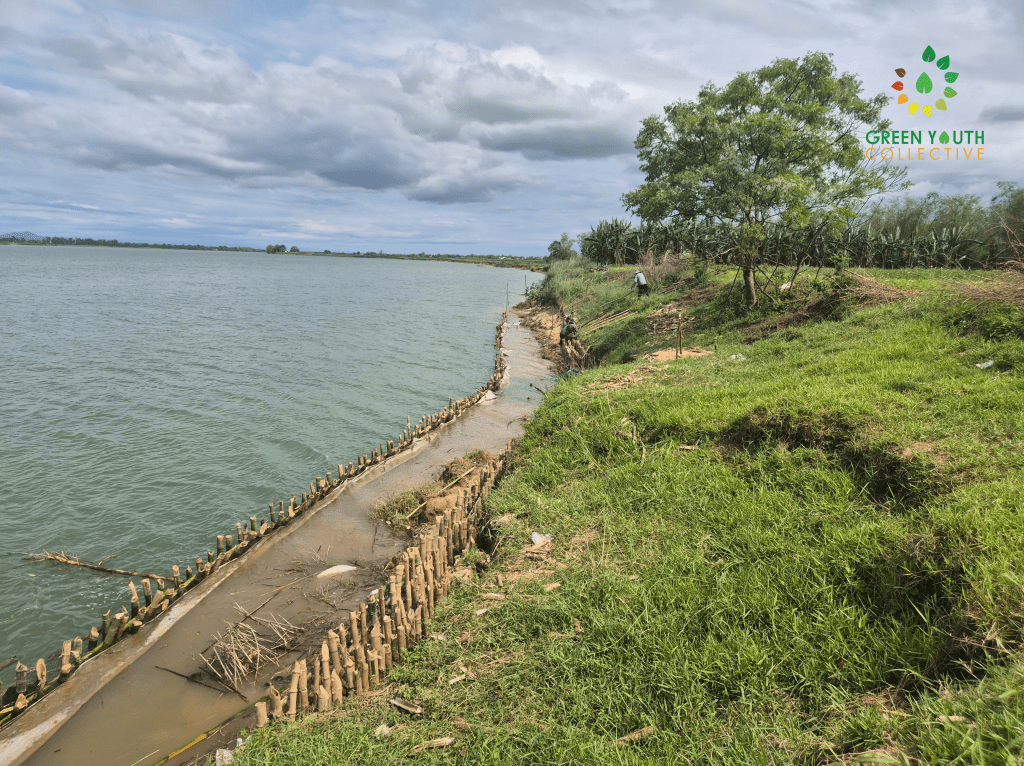
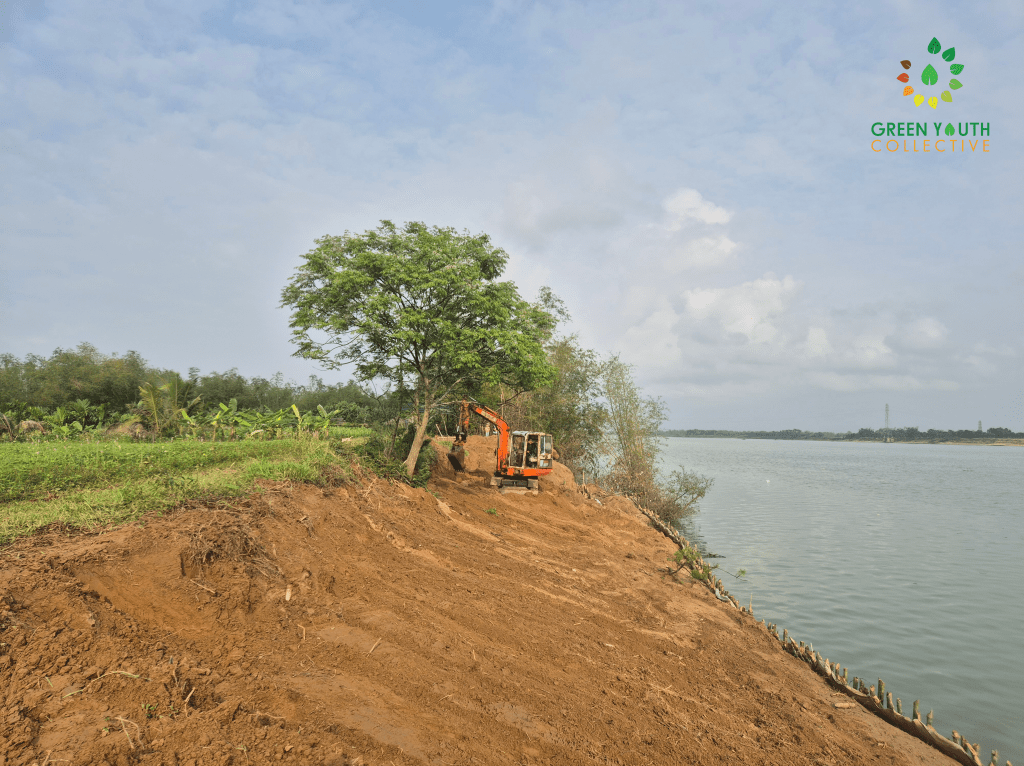
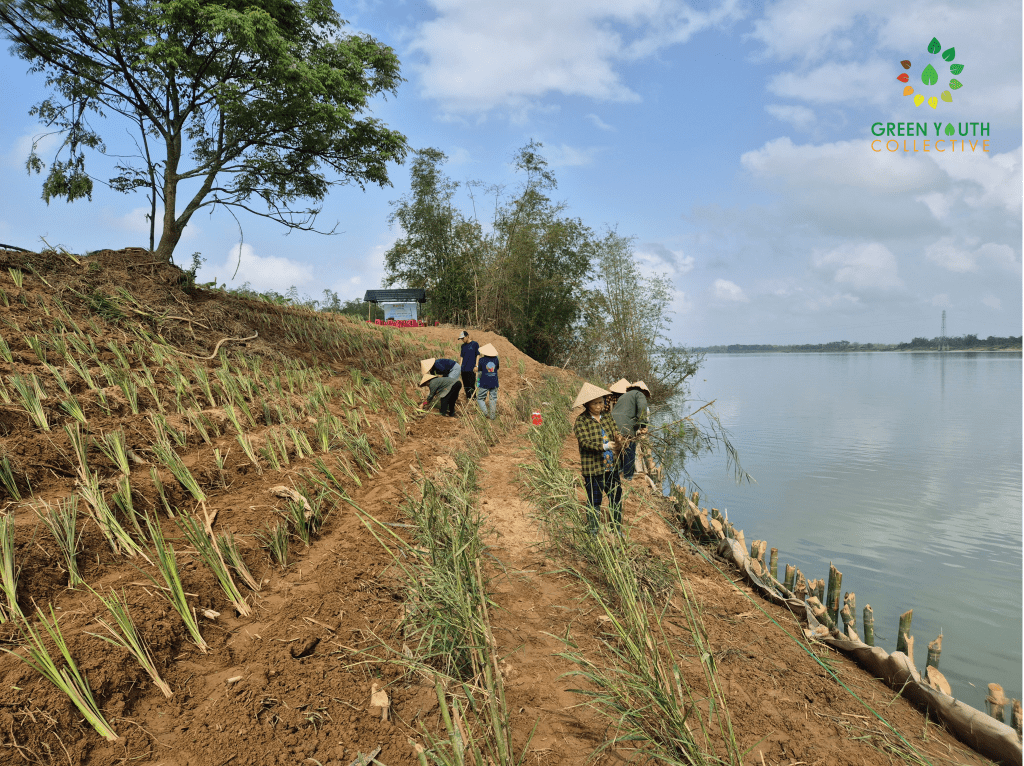
The initiative uses nature-based solutions that are practical, locally grounded and community-manageable. Bamboo revetment, live staking and layered riparian planting are combined to slow water force, reduce washout, trap sediment and rebuild the living edge between land and river. But what matters most is not only the technical design. It is the fact that the community is meant to understand, practice and gradually own the restoration technology itself. This includes learning how to plant, propagate and manage resilient species that can stabilize soil and regenerate habitat over time — such as reeds, vetiver, sea hibiscus and other locally suitable plants. In this approach, vegetation is living infrastructure. And the knowledge of how to cultivate and work with these species is part of the community’s long-term adaptive capacity.
The importance of the reality-tested appropriate technologies that GYC introduces goes beyond technical performance. Because they are visible, practical and rooted in local conditions, they create a shared entry point for collaboration between community members, cooperatives, technical practitioners, local authorities and supporting partners. In other words, species such as vetiver, reeds and sea hibiscus are not only tools for riverbank stabilization; they also help build a more inclusive platform for collective learning and action. As communities gain the ability to propagate, plant and manage these living systems themselves (via our Resilient & Useful plant nursery project), restoration becomes less dependent on external intervention and more grounded in local ownership, long-term stewardship and shared responsibility across stakeholders.
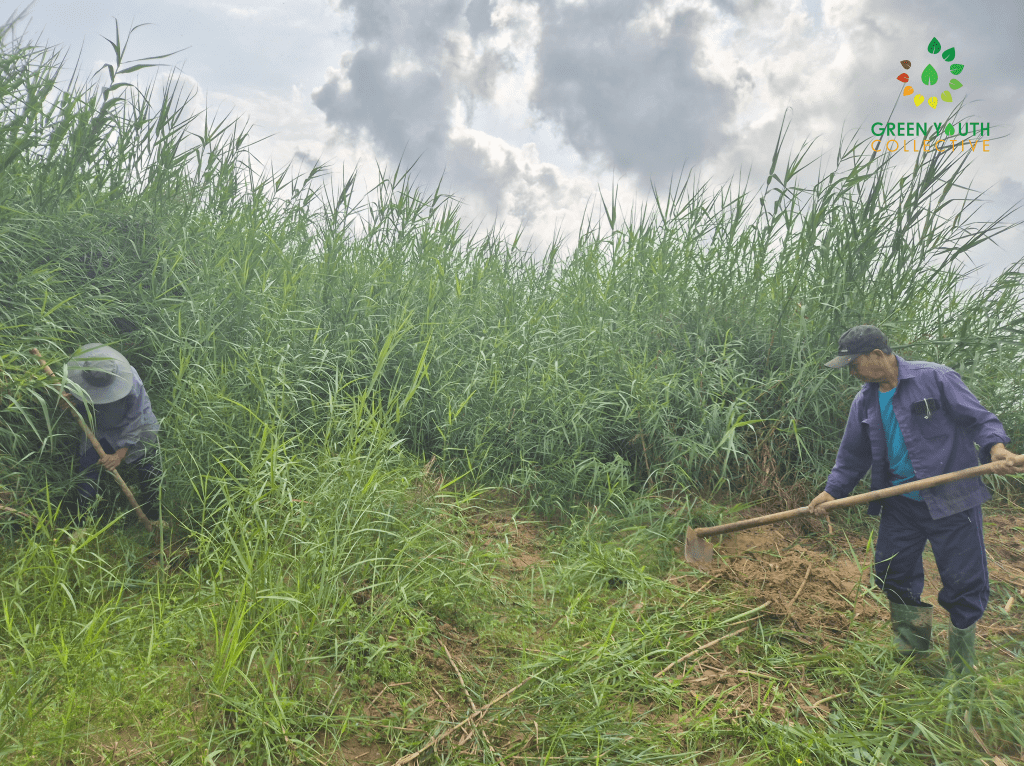
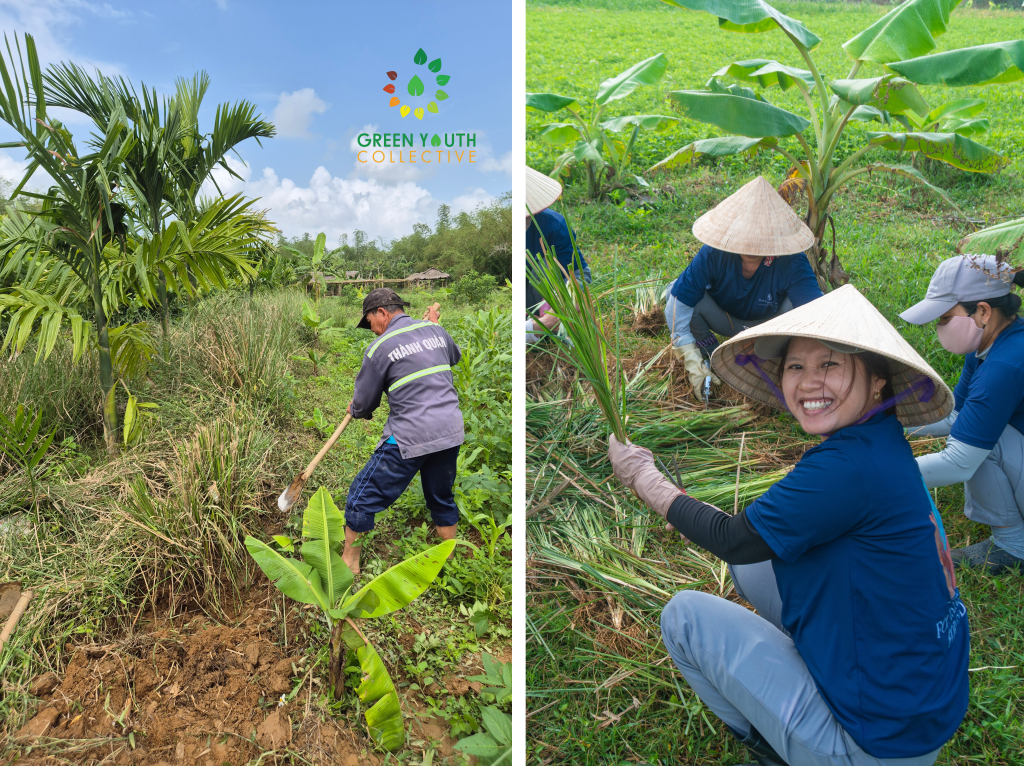
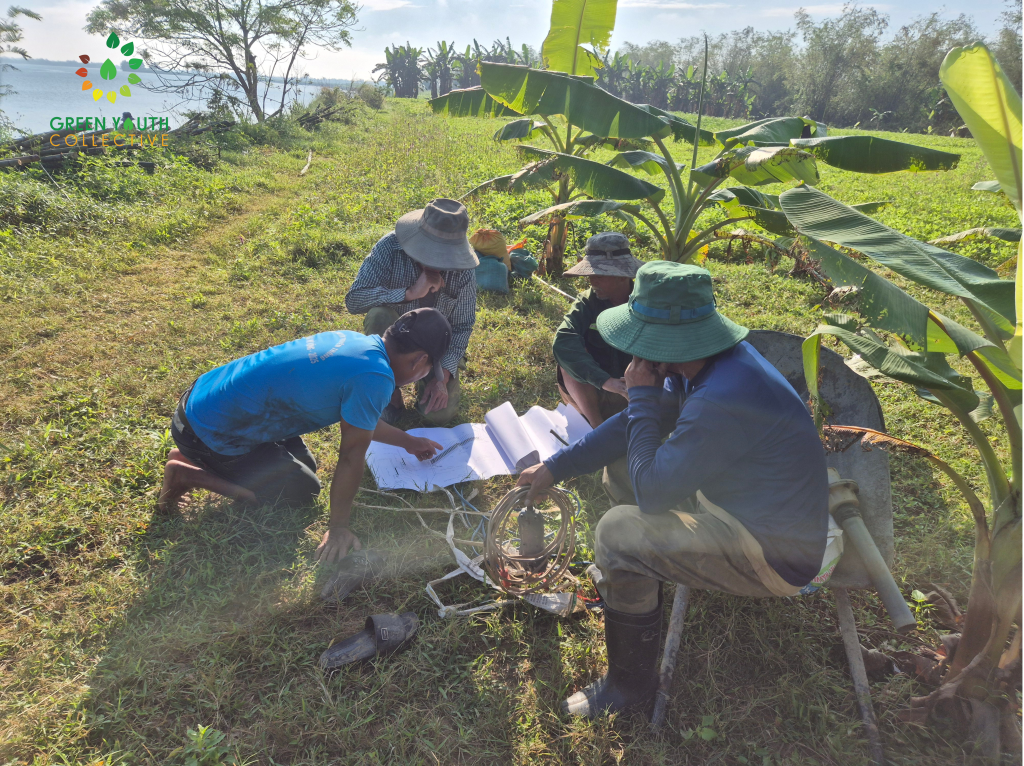
GYC places strong emphasis on creating a multi-stakeholder platform for co-creation. The restoration initiative is shaped through the participation of village residents, the Cẩm Phú Agricultural and Tourism Cooperative, local authorities, technical practitioners, sustainable tourism partners and other stakeholders who each hold part of the solution. Community members contribute land, labour, bamboo and pioneering plant species, monitoring observation and lived knowledge. Technical teams help translate ecological principles into workable restoration design. Authorities help create legitimacy and pathways for wider adoption. Partners help bring finance, communications and longer-term support.
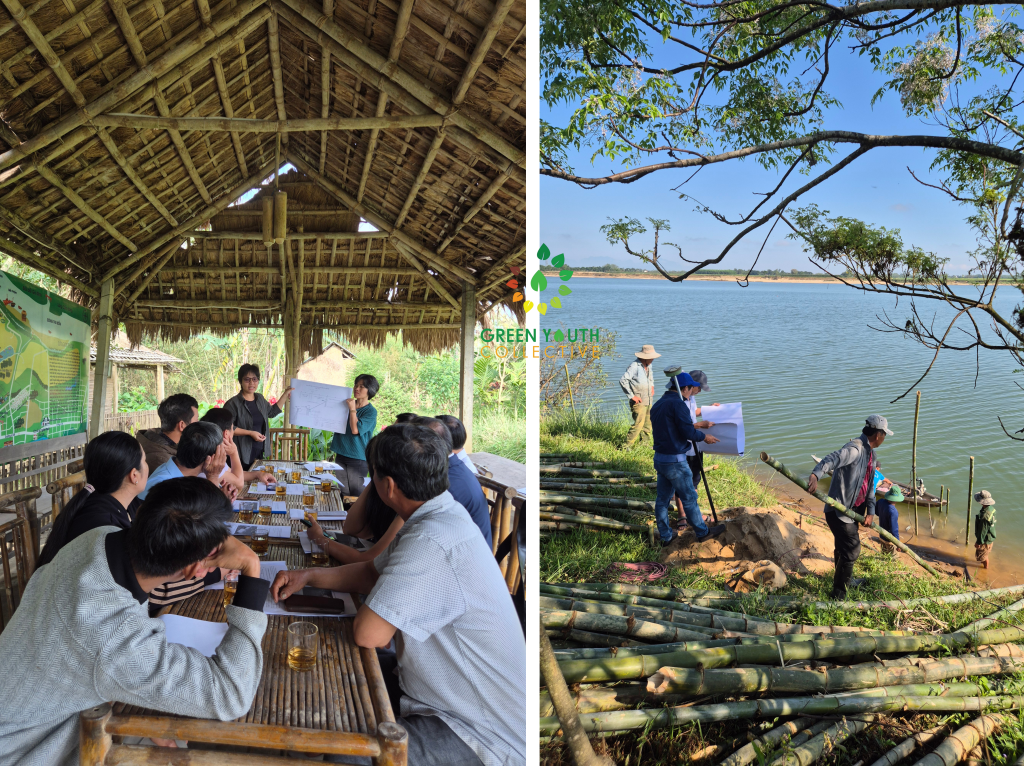
The project is not only restoring the agro-ecosystem of the floodplain landscape along the rivers. It is also restoring relationships: between local people and the land, between technical knowledge and local wisdom, between farming and biodiversity, and between institutions that too often work separately from one another. Resilience is about rebuilding the web of relationships that makes a place capable of adapting over time. In Cam Phu, that means restoring the connections between people, nature and a culture of living with the river rather than against it.
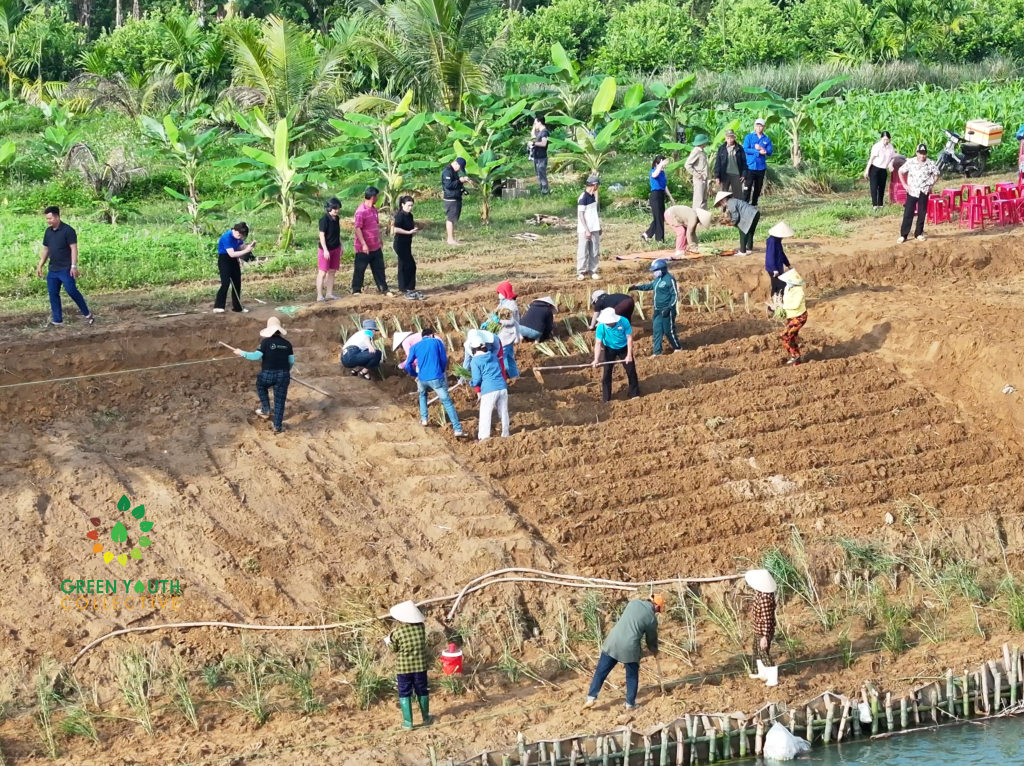
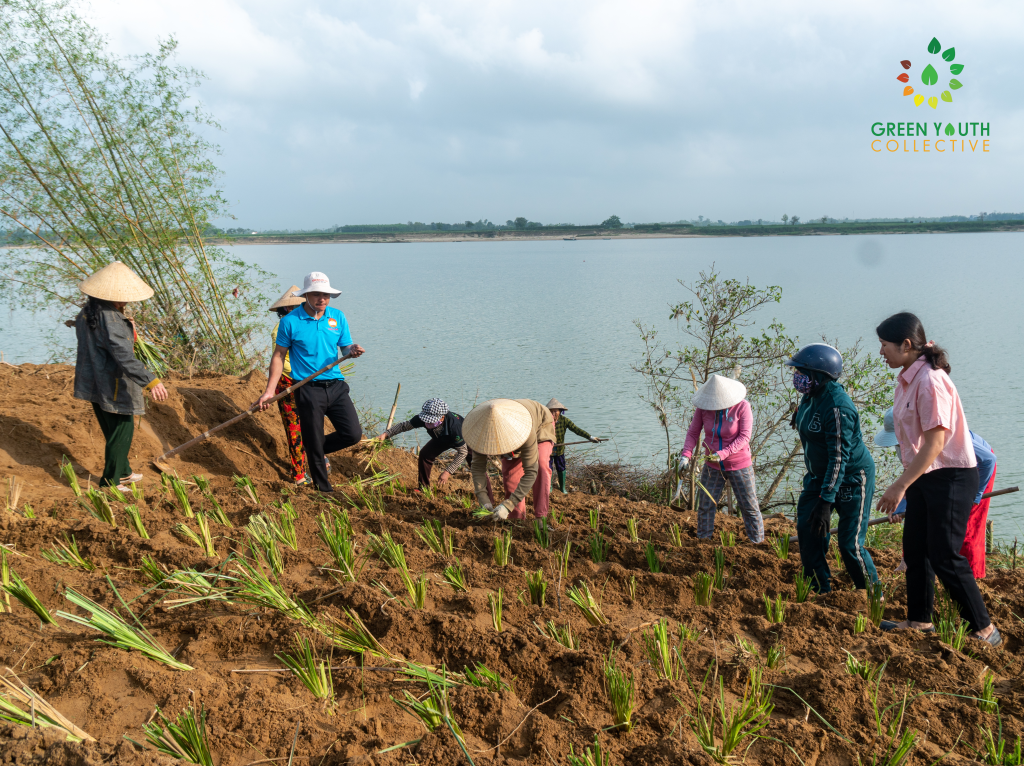
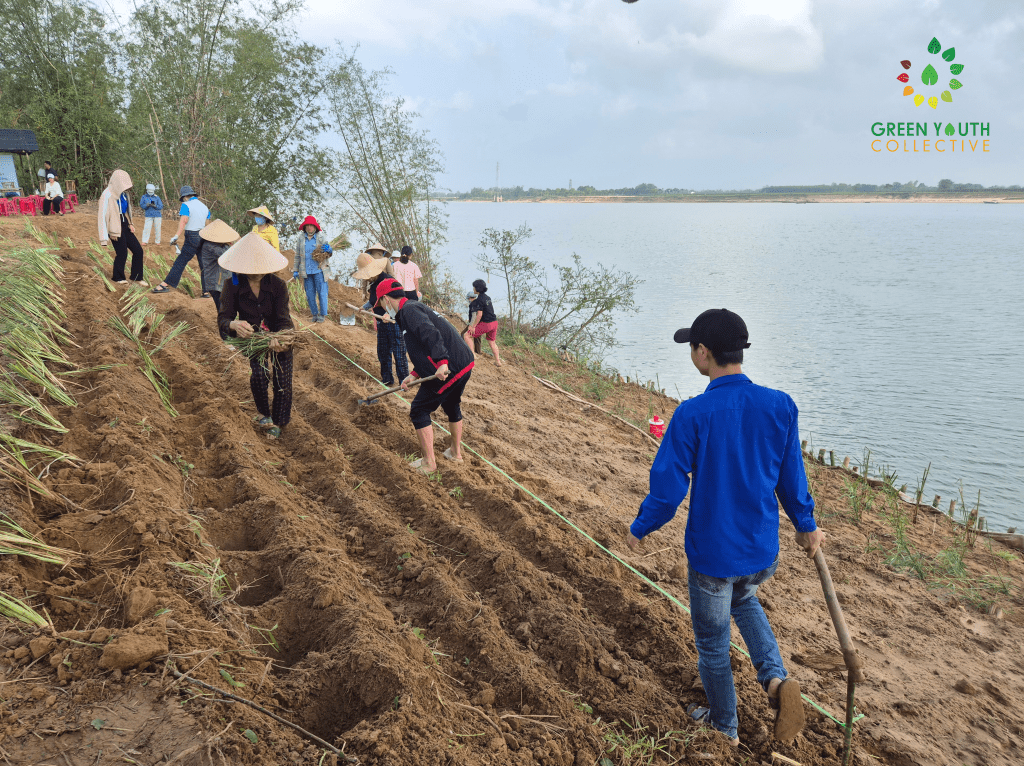
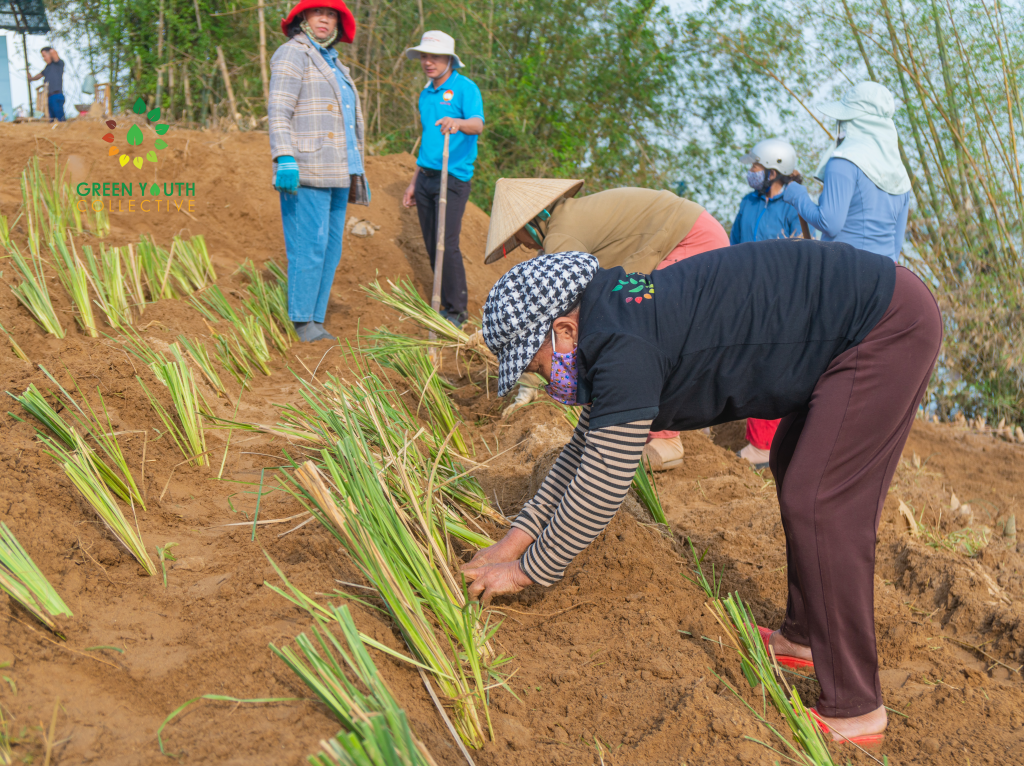
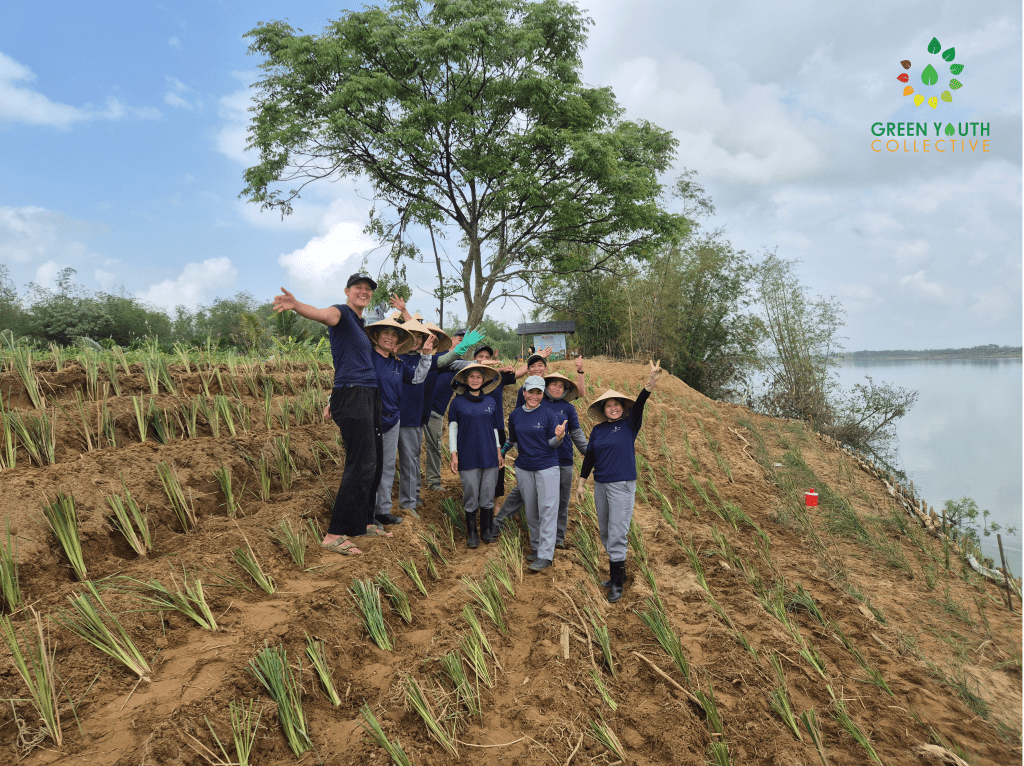
Local authorities, women, elderly, youth, farmers, workers, tourism partners…all share hands and hearts in this collective work.
The ecological value of this work is clear. A healthier riparian edge can hold soil more effectively, reduce runoff, retain sediment and support the enhancement of biodiversity. The economic value is equally important. A more stable riverbank creates the conditions for diversified livelihoods linked to ecological farming, medicinal plants preservation and utilisation, natural materials and local crafts rooted in species that also serve restoration functions. The social value may be the deepest of all: people begin to see themselves not only as those affected by climate risk, but as co-authors of adaptation.
Tourism is one example of how local livelihoods can evolve in response to a changing climate. However, unlike much of what is marketed as “eco-tourism” — often detached from real impact, or simply consuming existing nature and culture without helping to renew them — we position tourism differently. Within our ecosystem of solutions, tourism is embedded in a systemic regenerative model where ecological restoration and zero-waste-by-design resource management come first. Healthier riverbanks support biodiversity, reduce erosion and strengthen the resilience of the floodplain; that restored landscape then creates the conditions for place-based learning experiences, community-hosted journeys and new forms of rural enterprise. In turn, the value generated through tourism can flow back into ecosystem care, local livelihoods and long-term stewardship. The goal is not to market sustainability as an image, but to make tourism accountable to the living systems, cultural values and communities on which it depends.
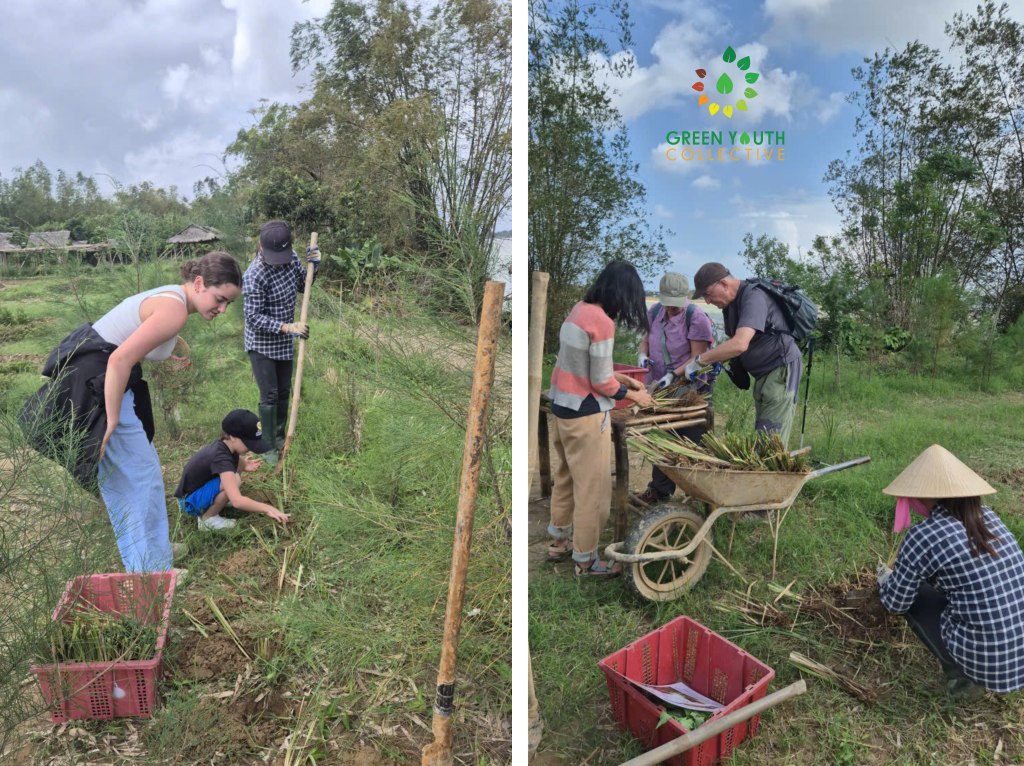
Traveling learners all over the world who are keen on sustainability and regenerative development, are invited to be a part of the transformation process onsite with Green Youth Collective, through hands-on and deep involvement in place-based solutions implementation. Tourism is designed to contribute and to be an integral part of the long-term evolution of the land and of the hosted community.
What we have been creating in the village is a practical platform for collaborative adaptation. It demonstrates that while the drivers of erosion may be large and systemic, communities do not need to wait passively for outside rescue. With the right facilitation, partnerships and ecological design, they can become active stewards of restoration and active makers of their own resilient future.
In Cam Phu, restoring the riverine agro-ecosystem means restoring something larger: the living relationship between river, floodplain, biodiversity, livelihood, culture and community. In a time of climate uncertainty, that may be one of the most important forms of resilience a place can grow.
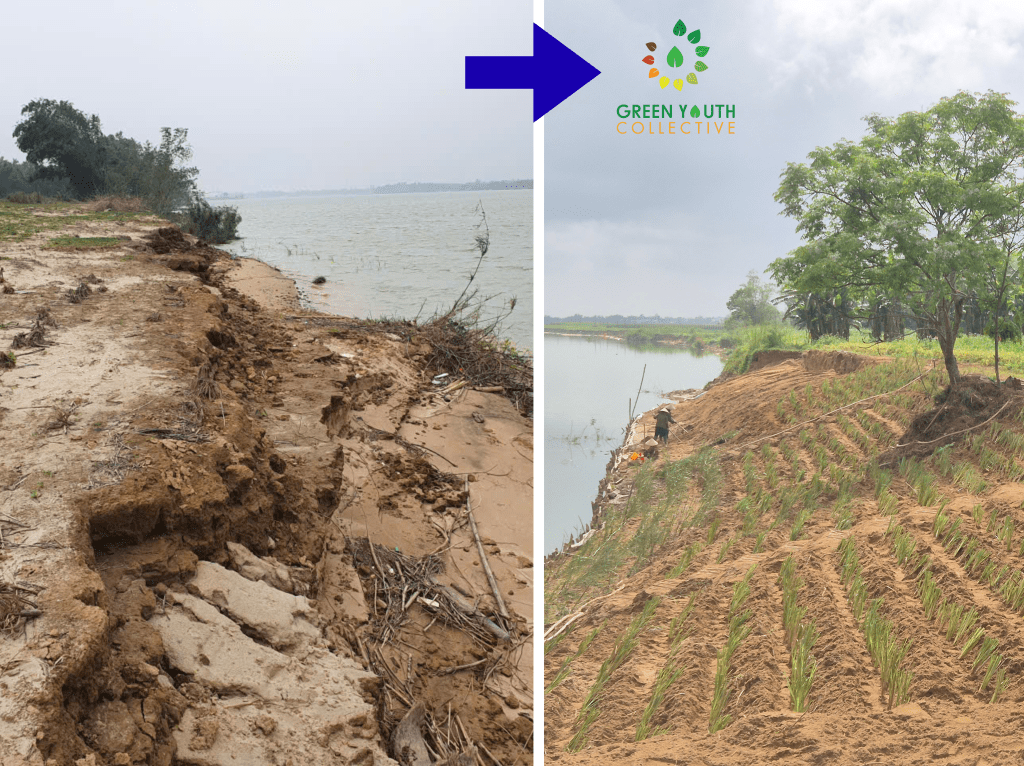
The pilot riverbank restoration in Cam Phu village implemented from January to March 2026, initiated by Green Youth Collective, financially contributed by EXO Foundation, Blue Swallow Fund | is a part of partnership between Green Youth Collective, WiseOceans and FourSeasons the Nam Hai | in collaboration with local government of Go Noi commune, Agricultural and Tourism Co-op of Cam Phu village, Cam Phu villagers and volunteering experts and supporters in/to Hoi An, Da Nang areas. Thank you all for believing in nature-based and community-led climate action.
 Vietnam's Community Schools for Regeneration