What is Regeneration?
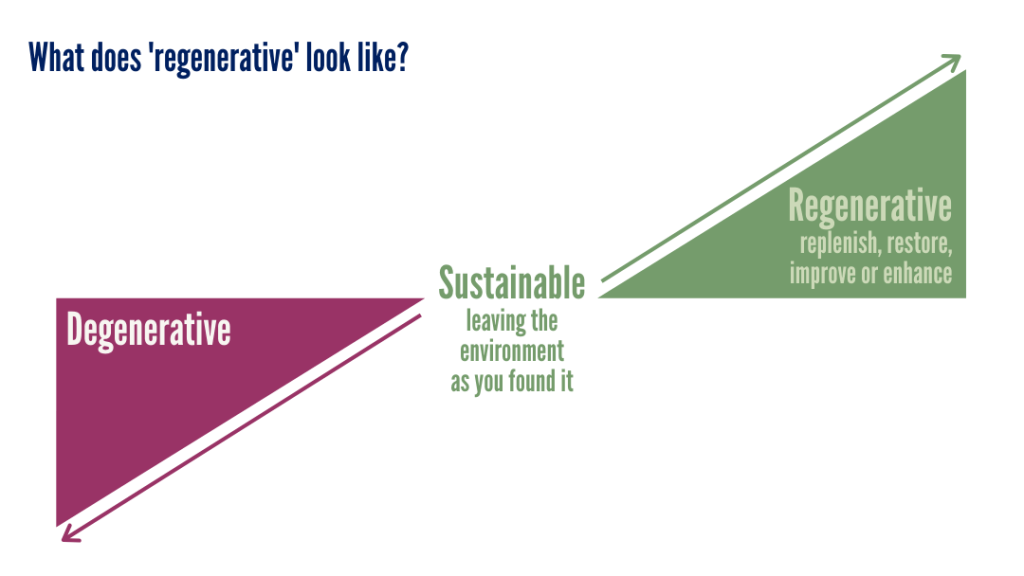
Regeneration refers to a way of thinking and acting that aims not only to reduce harm, but to restore, renew, and strengthen the living systems that support human and ecological well-being. In this sense, regeneration is a direction of development, grounded in how natural systems work—through cycles, relationships, diversity, and long-term balance.
Regeneration is not a fixed model or a checklist. It is a systemic approach that asks whether human activities contribute positively to the health of land, ecosystems, and communities over time.
What is Regenerative Tourism and Hospitality?
When applied to tourism and hospitality, regeneration takes on a more specific meaning.
Regenerative tourism and hospitality refer to approaches in which tourism activities are designed and operated so that they:
- Actively restore local ecosystems rather than degrade them
- Strengthen local livelihoods and community resilience
- Rebuild circular relationships between waste, food, land, and people
- Embed learning, stewardship, and care into daily tourism practices
In this context, tourism is no longer treated as a sector that must simply minimize its impacts. Instead, it becomes a potential driver of regeneration, capable of supporting soil health, biodiversity, climate resilience, and community well-being—if it is intentionally designed to do so.
Why Tourism Can Play a Leading Role in Regeneration
Tourism and hospitality influence many of the key systems that shape destinations:
- Resource use and waste generation
- Food production and consumption
- Land use and ecosystem pressure
- Employment, skills, and local economies
Because of this reach, tourism has a unique opportunity—and responsibility—to lead regenerative practices, particularly in destinations where tourism is a dominant economic activity. When tourism operations are connected to local regenerative systems, their scale and visibility can accelerate positive change across entire communities.
The Role of Green Youth Collective and REED Regenerative

Working as a community-based intermediary organisation, GYC & REED focus on designing and supporting solutions that allow tourism to contribute meaningfully to regeneration. Our works cover multiple, interconnected levels:
1. Redesigning Tourism and Hospitality Operations
At the business level, we work with hospitality and tourism enterprises to redesign daily operational processes. This includes:
- Integrating circular organic waste management into kitchen and service workflows
- Supporting changes in sourcing, food systems, and waste prevention
- Aligning business operations with local regenerative farming and restoration initiatives
Through this process, regeneration becomes part of how businesses operate.
2. Supporting Regeneration at Destination Level
Beyond individual businesses, we work at the destination scale, where long-term impact is shaped. This involves:
- Contributing practical insights from on-the-ground projects to local policy discussions and planning processes
- Supporting the development of community-based systems that tourism can plug into, such as composting networks, plant nurseries, and land restoration initiatives
- Acting as a locally embedded intermediary that helps align community priorities with tourism development
3. Enabling Meaningful Experiences for Visitors and Tour Operators
Regenerative tourism is also experienced by visitors.
We work with communities and partners to help create place-based experiences that allow travelers to:
- Engage with local regenerative practices in respectful, hands-on ways
- Understand the ecological and social context of the destination
- Contribute time, resources, or learning to community-led initiatives
These experiences provide tour operators and travel companies with grounded, credible products for sustainable and regenerative travel—rooted in real community systems, and as much important, to prevent “greenwashing”.
 Vietnam's Community Schools for Regeneration