Green Youth Collective (GYC) develops resilient and useful plant nurseries as a practical, community-led solution for land restoration, climate adaptation, and sustainable livelihoods.
Rather than focusing on short-term tree planting campaigns, this project builds local nursery systems that enable communities to continuously regenerate degraded land using plant species that are ecologically appropriate, climate-resilient, and socially useful.
The Challenge: Degraded Land, Climate Stress, and Limited Local Capacity
Across many rural and sub-urban areas, land degradation is accelerating due to:
- climate change impacts such as flooding, drought, erosion, and salinity,
- urbanisation and infrastructure development,
- declining soil health and biodiversity.
Conventional restoration efforts often rely on externally sourced seedlings and one-off planting events. These approaches are costly, difficult to maintain, and rarely aligned with local ecological conditions or community needs.
The Approach: Community-Based Nurseries as Living Infrastructure
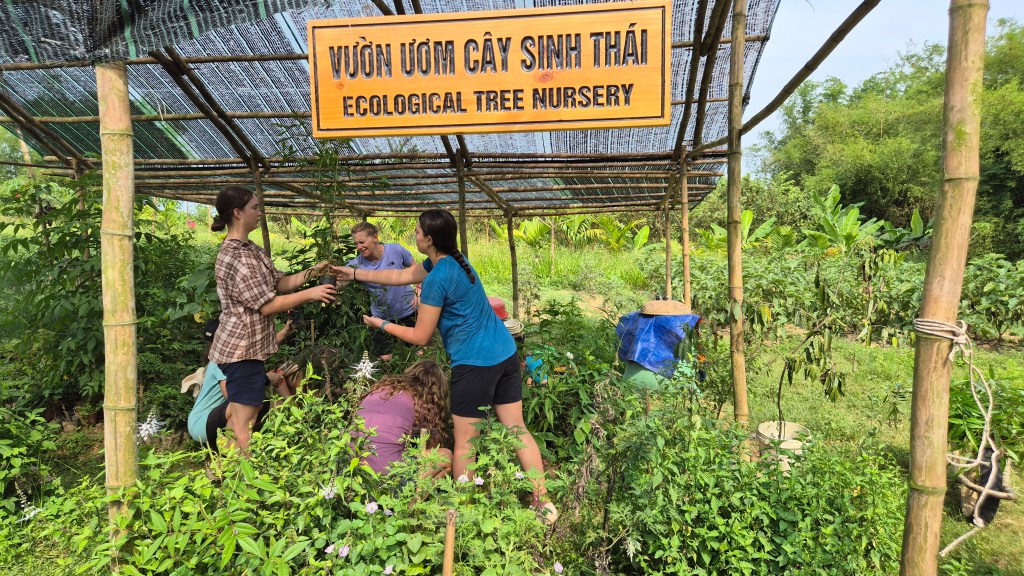
GYC responds by establishing community-scale plant nurseries that function as long-term ecological infrastructure rather than temporary projects.
These nurseries are:
- locally managed and operated,
- designed to propagate native, adaptive, and multi-purpose plant species,
- embedded within broader community land restoration and livelihood strategies.
The focus is on plants that serve multiple functions, including:
- soil stabilisation and erosion control,
- flood and drought resilience,
- improvement of soil fertility and microclimates,
- provision of food, fodder, materials, or economic value.
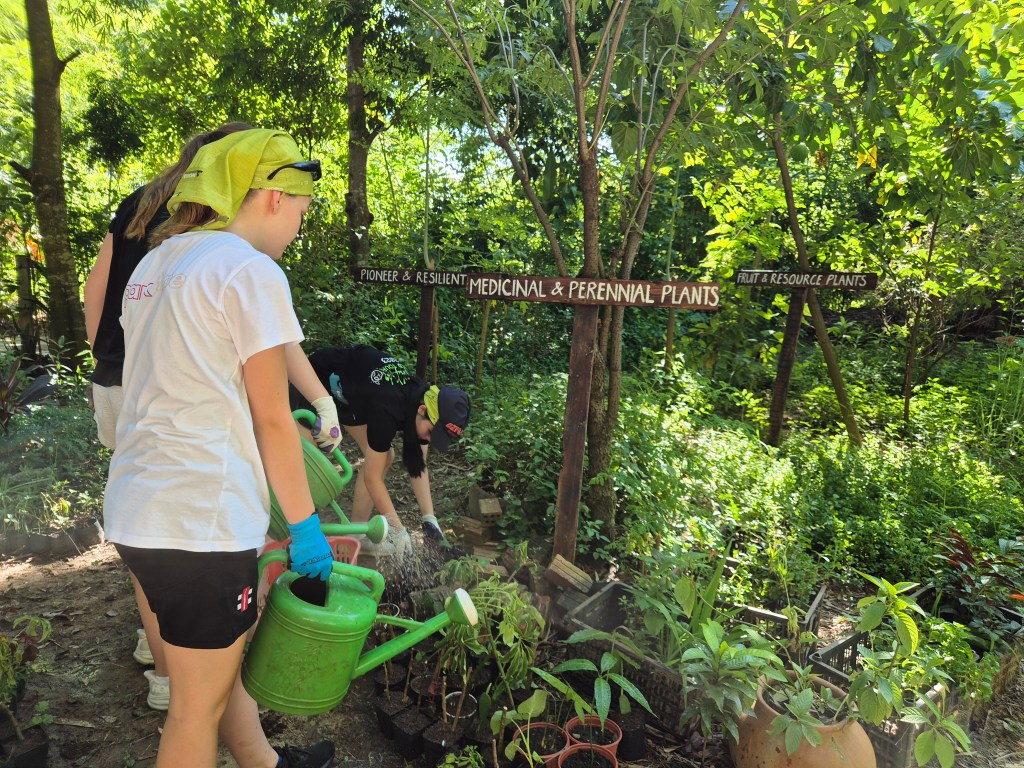

What Makes These Nurseries “Resilient and Useful”
The project prioritises plant species that are:
- well-adapted to local environmental conditions,
- tolerant to climate extremes,
- beneficial to surrounding ecosystems,
- useful to local livelihoods and farming systems.
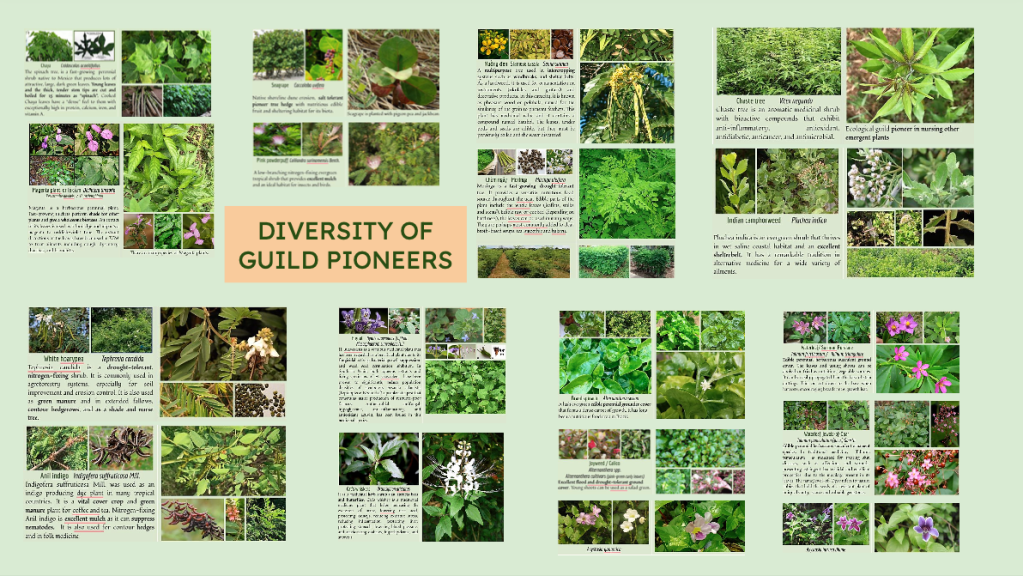
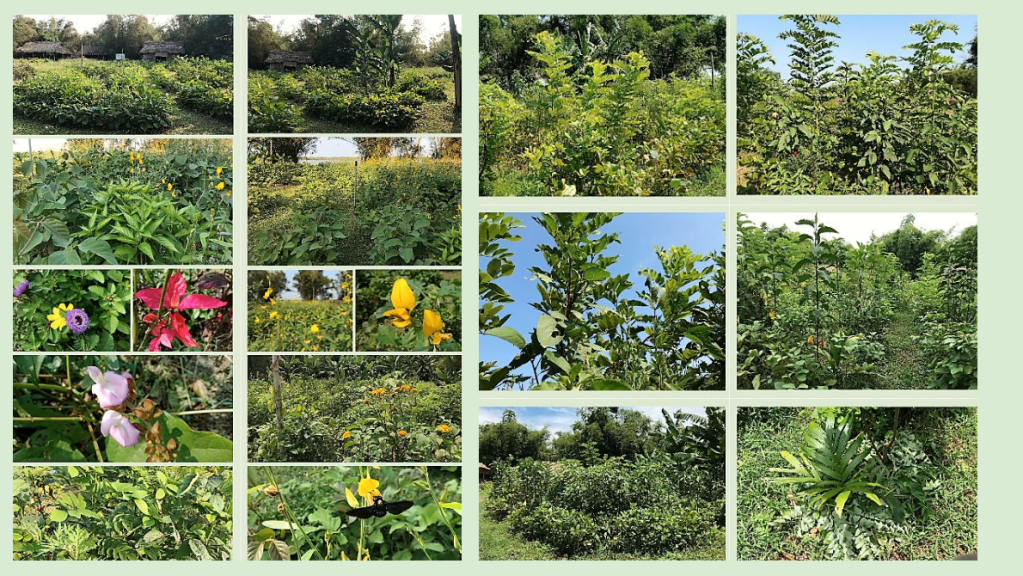
Over the years, starting with limited resources, mostly through field observation, wild seeds and cuttings collection, knowledge and seed exchange with other ecological farmers, GYC has been testing the plantation of over 200 plant species that are “resilient and useful” in our gardens and fields.
By aligning ecological function with practical use, the nurseries ensure that restoration efforts are both environmentally effective and socially relevant—increasing long-term care and survival of restored landscapes.
These nurseries provide the foundation for a resilient community land restoration model, because they:
- 🌱 Make available, on-site the high-quality plants for degraded home gardens, farms, and public lands. The plants that usually are not available at commercial plant nurseries
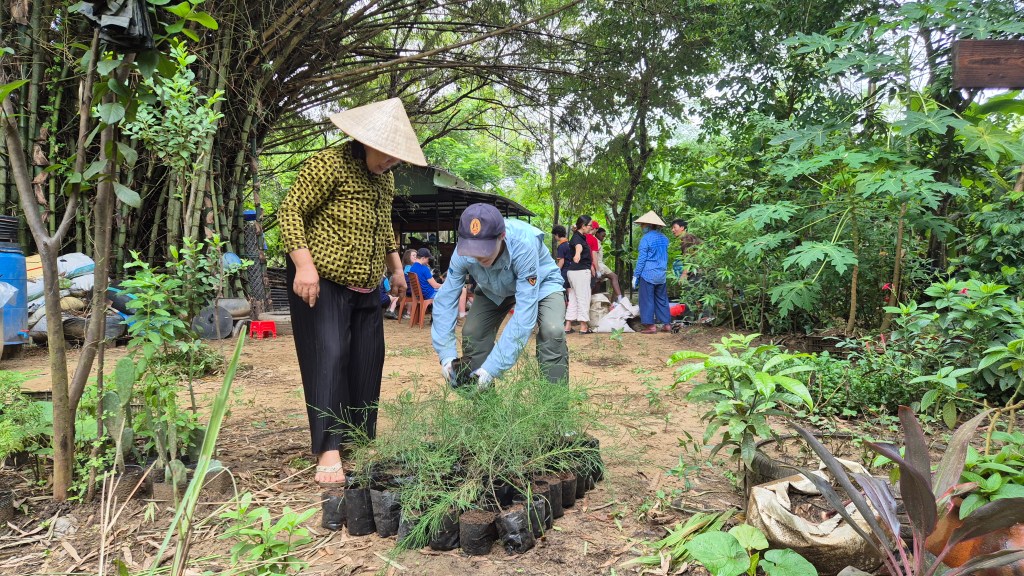
- 🧑🌾 Empower farmers to grow, plant, and propagate useful trees themselves
- 🌍 Serve as eco-education spaces, attracting learners and visitors
- 💚 Create opportunities for community-led social enterprise and sustainable income right where in-need people are.

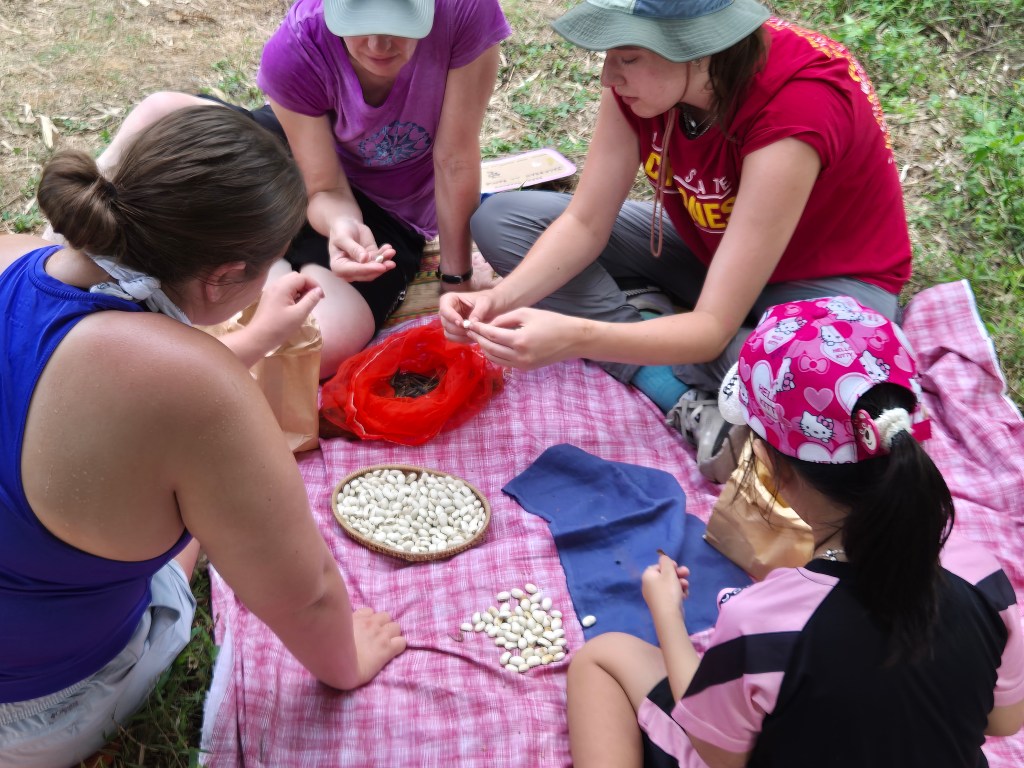
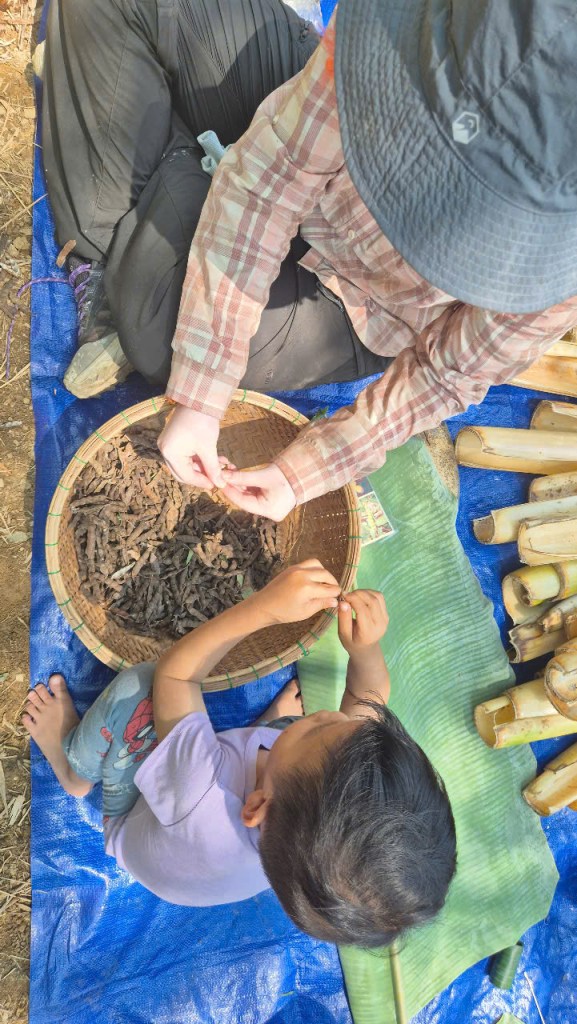
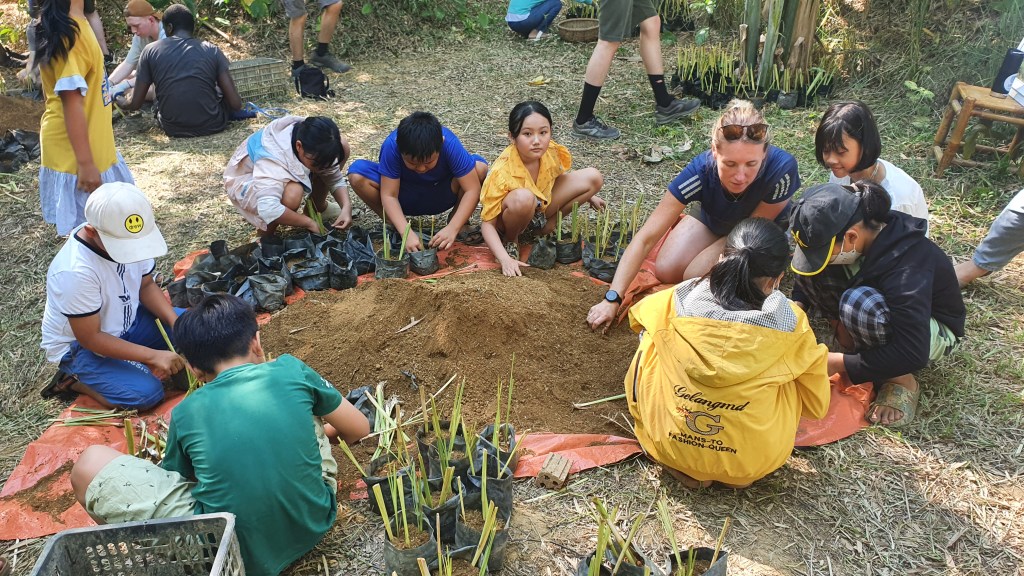
Saving Seeds, Sharing Hope. Traveling visitors learn about resilient and useful plants’ seeds with local children.
Livelihoods, Skills, and Local Ownership
Beyond environmental outcomes, the nurseries create:
- practical skills in plant propagation and land restoration,
- adaptive livelihood opportunities for farmers, youth, and local workers,
- a sense of ownership over restoration processes and outcomes.
Knowledge is shared through hands-on practice, ensuring that restoration capacity remains within the community.
Our strategy in action: From Waste to Life
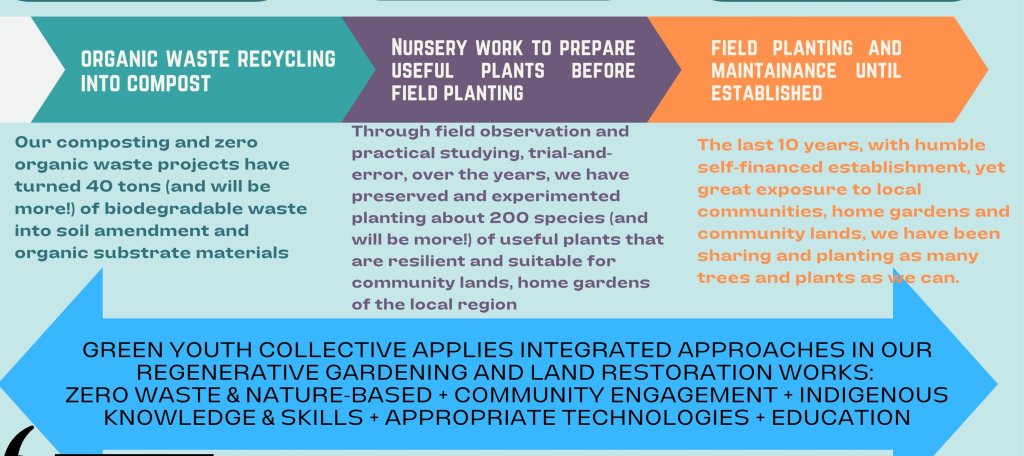
We follow a circular, community-driven process:
🔁 Organic Waste ➝ Compost & Soil Amendment
Every day now at the Community Compost Facilities, GYC with the team of waste worker staff has composted up to half a ton of biodegradable waste into nutrient-rich substrate to feed nurseries and closed-loop agriculture on our sites.
🌱 Nurseries ➝ Resilient Plants
Through years of trial in field and village life practices, we’ve curated 200+ native and useful plant species—adapted to local conditions and multifunctional (food, medicine, shelter, erosion control).
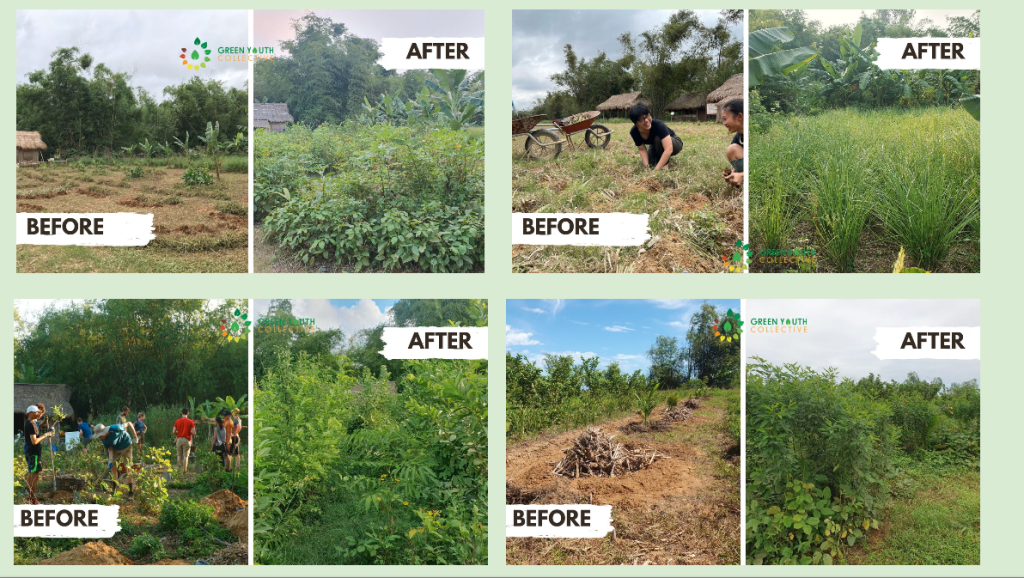
🌳 Planting ➝ Field Restoration
Plants are transferred to community gardens, farm edges, riverbanks, and degraded areas, where they anchor soil, restore ecosystems, and support livelihoods.
👣 Hands-On Learning ➝ Empowerment
Our nurseries are open to farmers, youth, and visitors—sharing techniques in agroecology, seed propagation, zero-waste living, and regenerative farming.

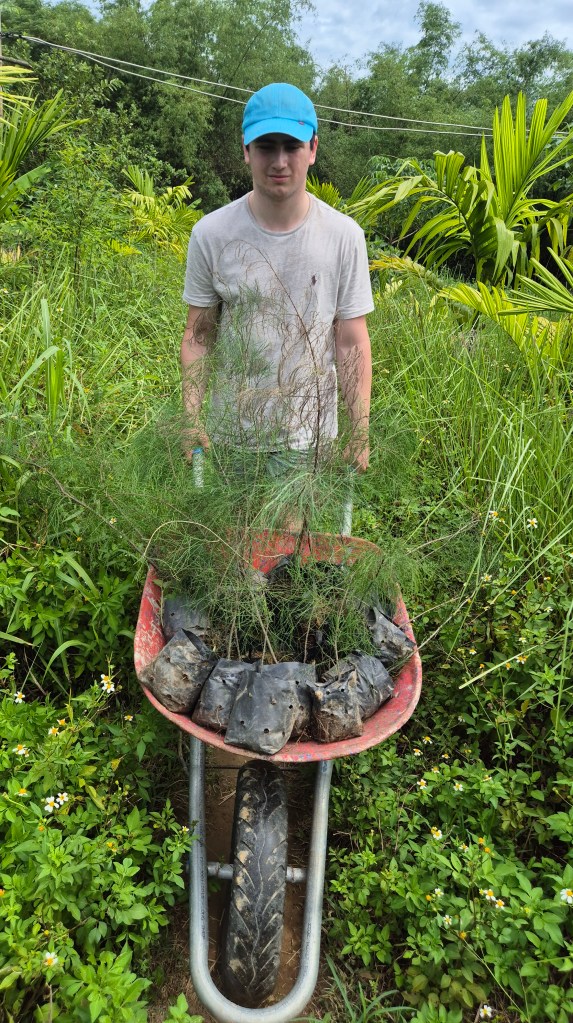
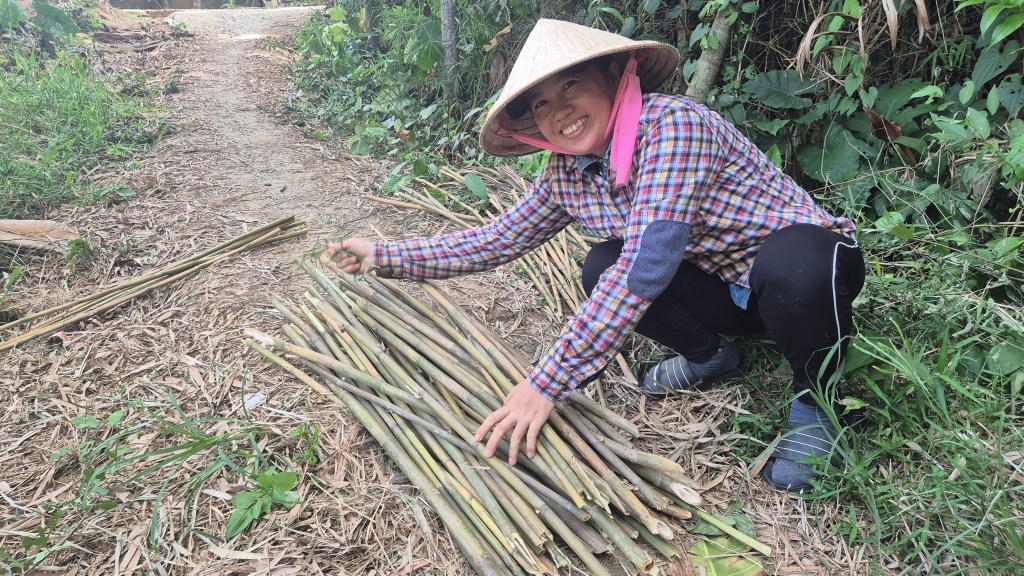
An example: Planting Reed bed (Common Reed – Phragmites australis) for multiple Ecological, Social and Economic benefits for community and land.
 Ecological benefits include: Water purification; Soil stabilization and erosion control; Carbon sequestration; Habitat restoration and increased biodiversity
Economic benefits include: Craft and construction materials; Livelihood opportunities in products made from the plants; Biomass resource
Social benefits include: Cultural and traditional practices conservation; Climate resilience and disaster risk reduction; Community involvement and empowerment
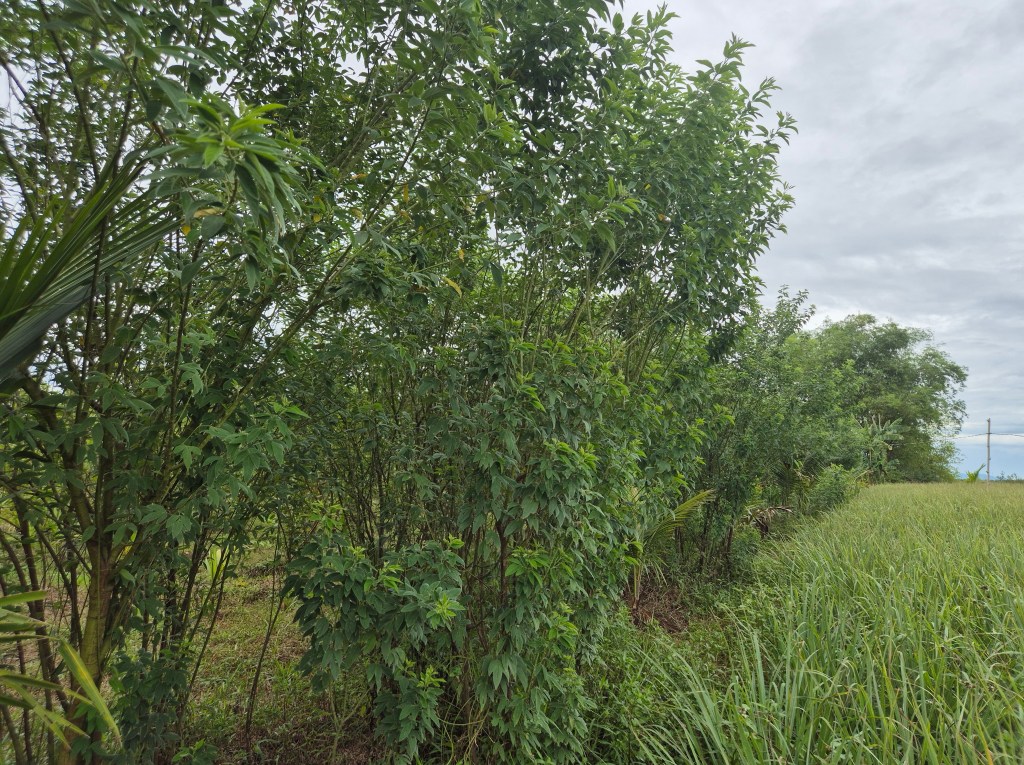
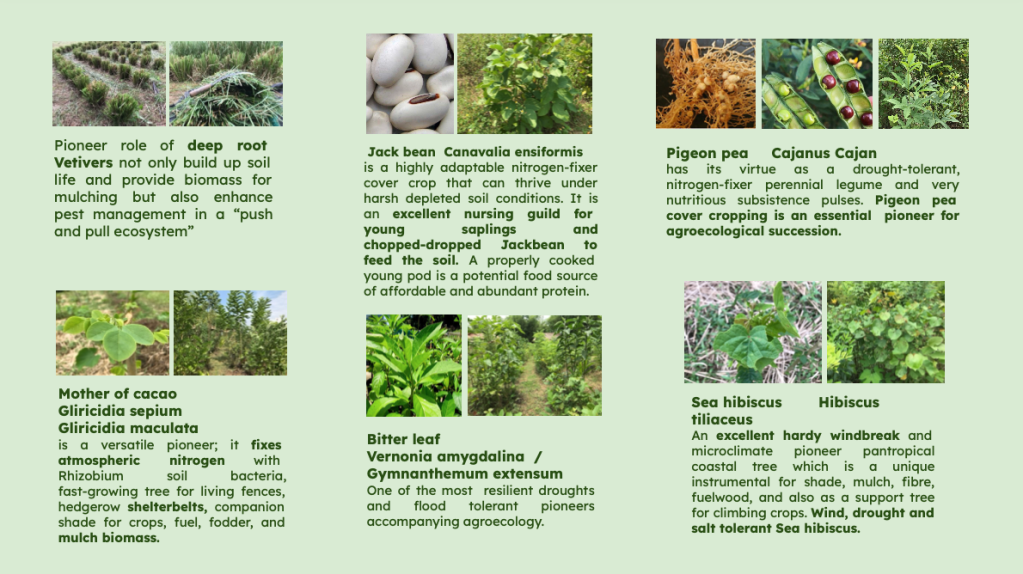
When the natural conditions are harsh, and financial resources are limited, our key strategy is soil building – nursery – pioneering system. The pioneering species become the “living nursery” on site within first established years.
Why this project matters?
✔️ Climate-Resilient Agriculture
The plants we grow are drought- and flood-tolerant, helping communities adapt to changing weather.
✔️ Biodiversity & Cultural Preservation
Many species are medicinal and indigenous, passed down through generations of local knowledge.
✔️ Economic Opportunities
Nurseries enable farmers to sell and exchange plants, host eco-tourism, or restore their own degraded lands.
✔️ Community Ownership
All sites are community-led, ensuring that solutions stay grounded and sustainable.
✔️ Educational Impact
From local youth to global learners, we provide a space for immersive, meaningful learning.
 Vietnam's Community Schools for Regeneration